
3 Ways How to Avoid Drainage Issues Before Landscaping Begins
A beautiful landscape needs more than the right plants, hardscaping, and outdoor features. It also needs proper drainage. Without a well-planned drainage system, water can collect in low areas, erode soil, damage plants, and create problems for patios, walkways, and other landscape features.
Addressing drainage before landscaping begins is one of the best ways to protect your investment and reduce maintenance over time. Through careful landscape drainage planning, property owners can identify potential water issues early and develop solutions that work with the overall design.
Here are three important ways to prevent drainage problems before starting a landscaping project.
1. Assess the Site, Soil, and Grading Before Landscaping in Eagle Mountain
The first step in preventing drainage problems is understanding how water naturally moves across the property. Before installing plants, lawns, irrigation, patios, or other landscape features, the site should be evaluated for existing slopes, low areas, soil conditions, and potential problem spots.
Proper site grading helps direct water away from structures and toward appropriate drainage areas. If a property has areas where water naturally collects, grading can often be adjusted before landscaping begins to establish better drainage patterns.
Soil assessment is also important. Different soil types absorb and retain water at different rates. Compacted or clay-heavy soil, for example, may drain slowly and increase the likelihood of standing water. Understanding these conditions allows the landscape design to account for drainage from the beginning.
For property owners planning landscaping in Eagle Mountain, addressing grading and soil conditions early can help create a healthier and more functional outdoor space.
2. Design Drainage Solutions Into the Landscape
Once the property has been assessed, the next step is determining whether additional drainage solutions are necessary. Depending on the site’s layout and water flow, several options can help move excess water away from areas where it could cause damage.
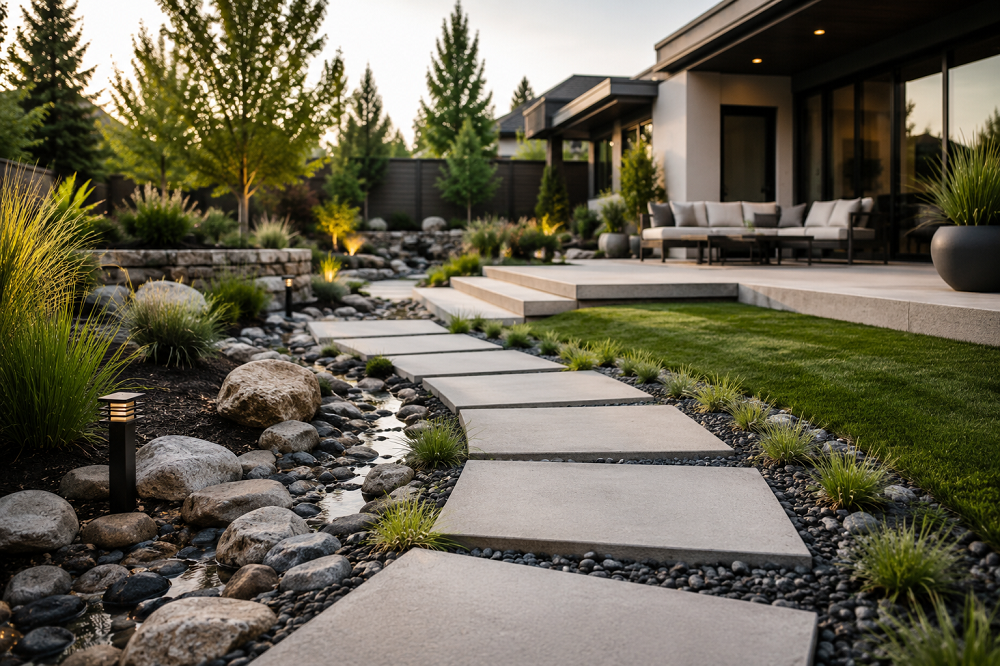
Swales are shallow, landscaped depressions that can guide water across a property while blending naturally into the landscape. They can be particularly useful when a property needs to redirect surface water without relying entirely on underground drainage.
French drains provide another option for properties where groundwater or surface water needs to be redirected. These systems typically use a perforated pipe surrounded by drainage material to collect and move water away from problem areas.
Catch basins can also be incorporated into landscape drainage systems to collect surface water and direct it toward an appropriate discharge point. They may be useful near patios, driveways, walkways, or other areas where water tends to accumulate.
The right solution depends on the property’s grading, soil, landscape design, and drainage requirements. Planning these features before installation makes it easier to integrate them without disrupting completed landscaping.
3. Coordinate Irrigation With Landscape Drainage
Irrigation is essential for maintaining healthy lawns and plants, but poorly planned watering can contribute to drainage problems. Too much water in one area can lead to pooling, erosion, plant stress, and saturated soil.
Irrigation should therefore be planned alongside the overall landscape drainage system. Sprinkler zones should provide appropriate coverage without repeatedly oversaturating particular areas. Drip irrigation may also be useful for specific planting areas because it delivers water more directly to the root zones.
Proper irrigation planning can also help protect hardscape features. Excess water flowing across patios, walkways, and other surfaces can contribute to erosion or drainage issues around their edges.
By coordinating irrigation with grading, soil conditions, and drainage features, homeowners can create a landscape that uses water efficiently while minimizing potential problems.
Why Landscape Drainage Planning Matters
Drainage should not be treated as an afterthought. When it is considered during the initial landscape design, drainage features can be incorporated more naturally and efficiently.
Good landscape drainage planning can help protect plants, lawns, structures, hardscaping, and soil from unnecessary water damage. It can also reduce the need for future repairs and ongoing maintenance.
A comprehensive approach considers how every part of the landscape interacts with water. Grading, irrigation, planting areas, patios, walkways, retaining features, and drainage systems should all work together rather than being designed independently.
Professional Landscaping Services in Eagle Mountain
Proper drainage planning requires an understanding of the entire property, not just where water happens to collect. Experienced professionals can evaluate the site and develop landscaping solutions that account for drainage, irrigation, hardscaping, and long-term maintenance.
If you’re planning a new landscape or redesigning an existing property, landscaping services in Eagle Mountain can help coordinate the outdoor design with the property’s functional needs. Integrating drainage considerations from the beginning can make the finished landscape more durable, efficient, and easier to maintain.
Create a Landscape Built for Long-Term Performance
Preventing drainage issues starts before the first plants are installed or the first hardscape surface is constructed. Evaluating the site’s grading and soil, incorporating appropriate drainage solutions, and coordinating irrigation with the landscape design can help prevent water-related problems.
For homeowners planning a new outdoor space, Wright Landscaping‘s can help bring these elements together as part of a thoughtful, functional landscape design. With the right planning from the beginning, your property can have an outdoor space that manages water effectively, performs well over time, and remains attractive and easier to maintain.
RELATED POSTS

Top Landscaping Projects to Consider in the Fall Season

Low Maintenance Front Yard Landscaping: Features to Consider
